
Understanding Wind Sensors: How They Can Help Your Sunesta Awning Last Longer

How Wind Sensors Actually Work
A lot of Prestige Shade customers install a wind sensor on their Sunesta retractable awning and then stop thinking about the weather entirely. That’s understandable — it feels like exactly what the sensor is for. It’s also the assumption that’s been causing avoidable awning damage.
Here’s what a Sunesta retractable awning wind sensor actually does, where its limits are, and why you’re still the one who needs to keep an eye on the forecast.
What the Sensor Actually Detects
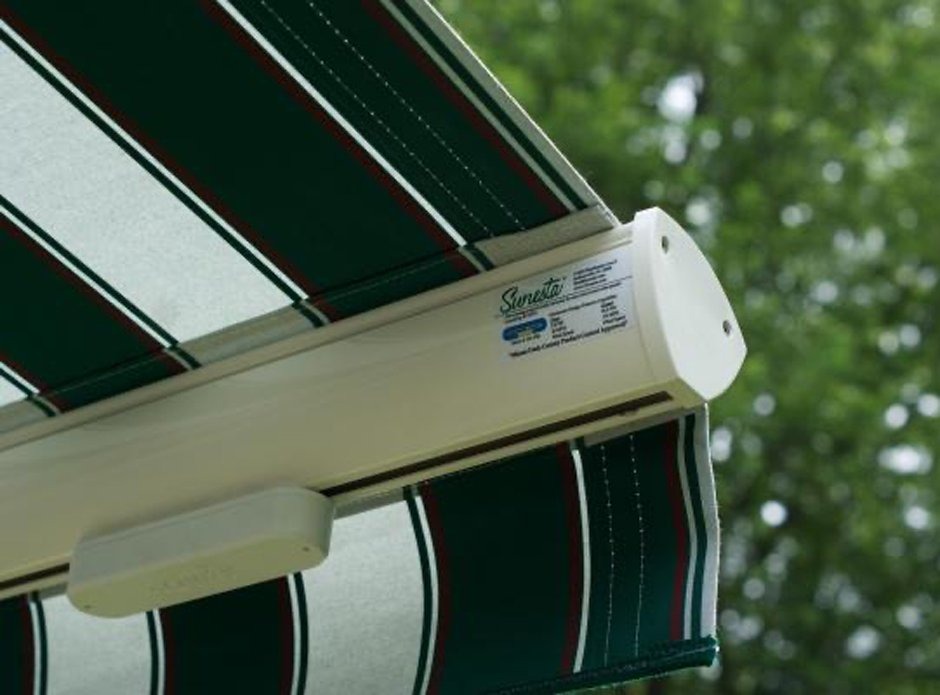
A wind sensor doesn’t measure wind speed. What it detects is the awning’s own movement — the bouncing and flexing that happens when wind pushes against the extended fabric.
At the recommended sensitivity setting, the sensor is designed to signal the motor to retract the awning automatically once that bouncing motion has happened three times. It’s a motion-based trigger, not a live wind-speed reading, and that distinction matters for understanding what the sensor can and can’t respond to.
What to Keep In Mind
Three bounces takes a moment to register, even at the most sensitive setting. That’s not a flaw in the sensor — it’s simply how the mechanism works. The problem shows up with a specific kind of weather: sudden, severe gusts, the kind that often hit right at the onset or the tail end of a strong storm front.
Those gusts can hit hard enough to damage an awning before the sensor has had time to detect three bounces and react. A sensor set as sensitively as possible still can’t outrun a wind event that arrives all at once rather than building gradually.
This is the exact scenario behind a lot of the sensor-related awning damage Prestige Shade sees: a customer trusted the sensor to handle a storm that moved in too fast for a motion-based trigger to catch in time.
You’re Still the First Line of Defense
A wind sensor is a genuinely useful backup — it catches the wind you didn’t see coming, the gust that picks up while you’re at work or asleep. What it isn’t is a reason to stop paying attention to conditions you can see coming.
If a strong storm front is in the forecast, the safest move is to retract the awning yourself ahead of time rather than leaving it extended and trusting the sensor to react fast enough. The sensor is there for the wind you couldn’t have predicted — not as a replacement for checking the forecast when severe weather is already expected.
This is worth understanding whether you’ve had a Sunesta awning for years or you’re considering adding one. The sensor adds a real layer of protection. It just isn’t the only layer that matters.
Getting the Most Out of Your Sensor
A few practical habits make the difference:
- Check the forecast before you extend the awning, especially during Columbus’s fall transition, when fronts can move through faster than expected.
- Retract manually ahead of a known storm. Don’t wait on the sensor to catch a gust that the forecast already told you was coming.
- Treat the sensor as backup, not a substitute. It’s built to catch what you can’t predict, not everything.
Fall Awning Care Checklist for Columbus Homeowners
A wind sensor is the centerpiece of fall protection, but it’s not the only thing worth checking as the season turns. A few habits keep the whole system in good shape through the transition into winter:
Confirm the sensor is active and calibrated. If it’s been a year or more since installation, or if you’ve had any service work done on the motor, it’s worth a quick check that the sensor is still communicating with the motor correctly.
Check the fabric for early wear. Fall is a good time to look over the fabric while the awning is still in regular use — small tears, loose stitching, or sap and debris buildup from nearby trees are all easier to address now than after a winter of freeze-thaw cycles.
Clear the area under and around the awning. Falling leaves and branches don’t just create mess — debris caught in the mechanism during retraction can strain the motor or block the fabric from closing fully.
Plan for winter storage. Sunesta awnings are built for outdoor exposure, but most manufacturers still recommend fully retracting the awning for extended periods of freezing weather or heavy snow load, since wet fabric that freezes can crack, and snow accumulation on an extended awning is a different kind of stress than wind. A wind sensor handles the day-to-day wind risk in fall; a full retract-and-cover approach is still the right call once Columbus settles into winter proper.
Test manual override. Even with a wind sensor installed, it’s worth confirming you can still control the awning manually through the MyLink2 app or wall switch, so you’re not relying on the sensor alone if you want the awning closed for any other reason.
None of these take long, and together they mean the system you invested in over the summer comes out of winter ready to go, rather than needing repairs before the first warm weekend of spring.
Frequently Asked Questions About Wind Sensors
Can a wind sensor be added to an awning I already own? In most cases, yes. If your Sunesta awning is motorized, a wind sensor can typically be added as a retrofit rather than requiring a full system replacement. The specifics depend on the motor and control setup already in place, which is something worth confirming during an in-home visit.
Will the sensor retract the awning for every gust of wind? No. The sensor is calibrated to your specific awning model and set to respond to sustained wind conditions at the threshold that actually puts the structure at risk, not to every brief gust that passes through. This calibration is part of what a professional installation gets right, since a threshold set too low means constant, unnecessary retraction, and one set too high defeats the purpose.
Does a wind sensor work if the power goes out? Wind sensors are wired into the awning’s motor system, so they depend on the same power source as the motor itself. If you’re in an area prone to outages during fall storms, that’s worth discussing as part of your overall setup, since it affects both manual and automatic control.
How is a wind sensor different from just watching the weather and retracting manually? The difference is coverage. Checking the forecast works when you’re home and paying attention. A wind sensor works when you’re at the office, asleep, or out of town for the weekend, which covers the majority of hours in any given week. It’s not a replacement for good judgment. It’s protection for the hours when judgment isn’t an option.
Do I need a wind sensor if I already have The Sunroll or The Sentry installed? Screens and awnings serve different purposes and typically have different wind tolerances, so a sensor on the awning doesn’t automatically cover the screens. Worth asking about during installation if you’re running both systems together.
Why This Matters for the Life of Your Awning
An awning caught extended in a real gust is under real stress — on the fabric, the arms, and the motor. A wind sensor’s whole job is to prevent that scenario from happening in the first place, which is a meaningfully different (and better) outcome than dealing with damage after the fact.
This is especially relevant heading into fall, when Prestige Shade customers are thinking about how to get the most out of their outdoor space before winter — and how to make sure the system they invested in over the summer is still in good shape when the weather warms back up. A wind sensor is one of the more practical, lower-profile ways to protect that investment through the season when it’s least being watched.

What Professional Installation Looks Like
Every Sunesta accessory Prestige Shade installs, including wind sensors, is set up as part of a custom, professional installation — never a generic add-on. David Grant walks through your specific awning model, your home, and how you actually use your outdoor space, then makes sure the sensor is calibrated correctly for that system. There’s no guesswork and no pressure to decide on the spot.
If you already have a Sunesta awning without a wind sensor, or you’re planning a new installation and want to make sure it’s built in from the start, that’s a conversation worth having before the fall winds pick up in earnest.
Extend Your Season, Protect Your Investment
Columbus’s fall weather is exactly the kind of unpredictable that makes an unattended awning a real risk — and exactly the kind of mild, extend-the-patio-season weather that makes keeping the awning usable worth the effort. A wind sensor handles the risk side automatically, so you can focus on the part that’s actually enjoyable: more weeks of shade, more evenings outside, less thinking about the forecast.
Request a free in-home estimate to talk through wind sensors, screens, or anything else that could help you get more out of your outdoor space this fall.
Or call 614-230-3498. David is available Monday through Saturday, 8 a.m. to 8 p.m.